Your loan officer offers you a float-down. For a fee, you keep your locked rate if the market rises, and you get one chance to reset lower if it falls. It sounds like the best of both.
We think most borrowers should decline it, and the reason has nothing to do with the fee being large. It has to do with what you already own.
This is part three of a series. Part one covers what each lock period costs. Part two covers what happens to your loan the moment you lock, which is where this argument comes from.
What a float-down actually is
A float-down is a contractual add-on to a rate lock. It gives you one chance, in one direction, to reset your locked rate to a lower market rate before you close.
The terms are more restrictive than the pitch suggests. Across lenders that offer it, the pattern is consistent:
- A fee, typically 0.25% to 1.0% of the loan amount, paid upfront and non-refundable. On a $500,000 loan that is $1,250 to $5,000. Some lenders build it into a slightly worse starting rate instead.
- A trigger, usually a drop of 0.25% to 0.50% in market rates. Below the trigger, nothing happens.
- One exercise. If you use it and rates keep falling, that is the end of it.
- You have to ask. It is never automatic. Miss it and you close at your locked rate.
- It does not extend your lock. If your closing slips, the float-down window does not follow it.
So you are buying a single-use, one-direction option with a strike price set by the lender, on an underlying you cannot predict, over a window of 30 to 60 days.
The four things that can happen
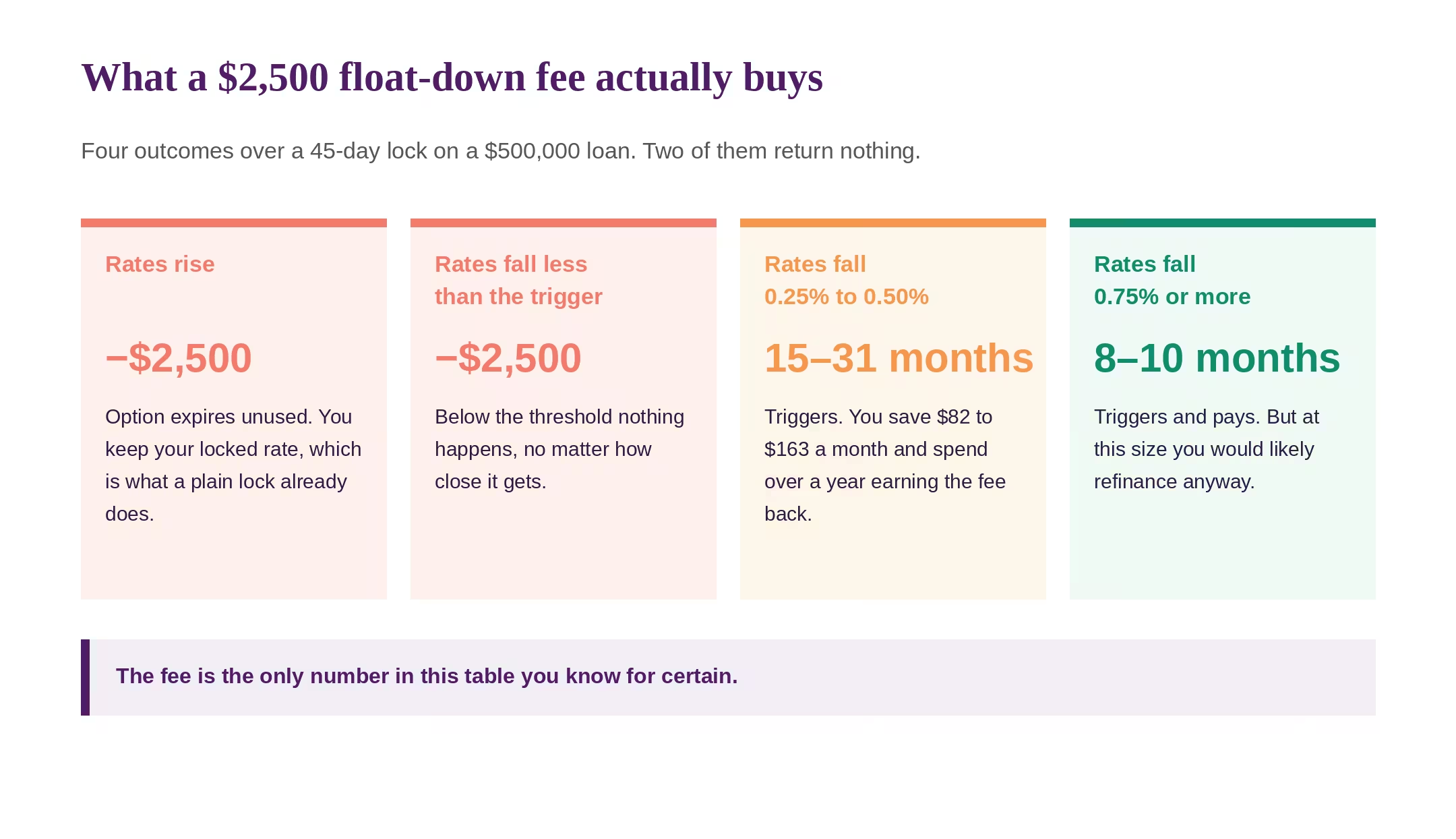
Two of those four outcomes return nothing at all, and between them they cover most 45-day windows. That is not a scandal. That is what options do. The question is whether the price is right.
The break-even, on a real loan
Take a $500,000 loan at an illustrative 6.50%, with a float-down fee of 0.50 points — $2,500, the middle of the market range.
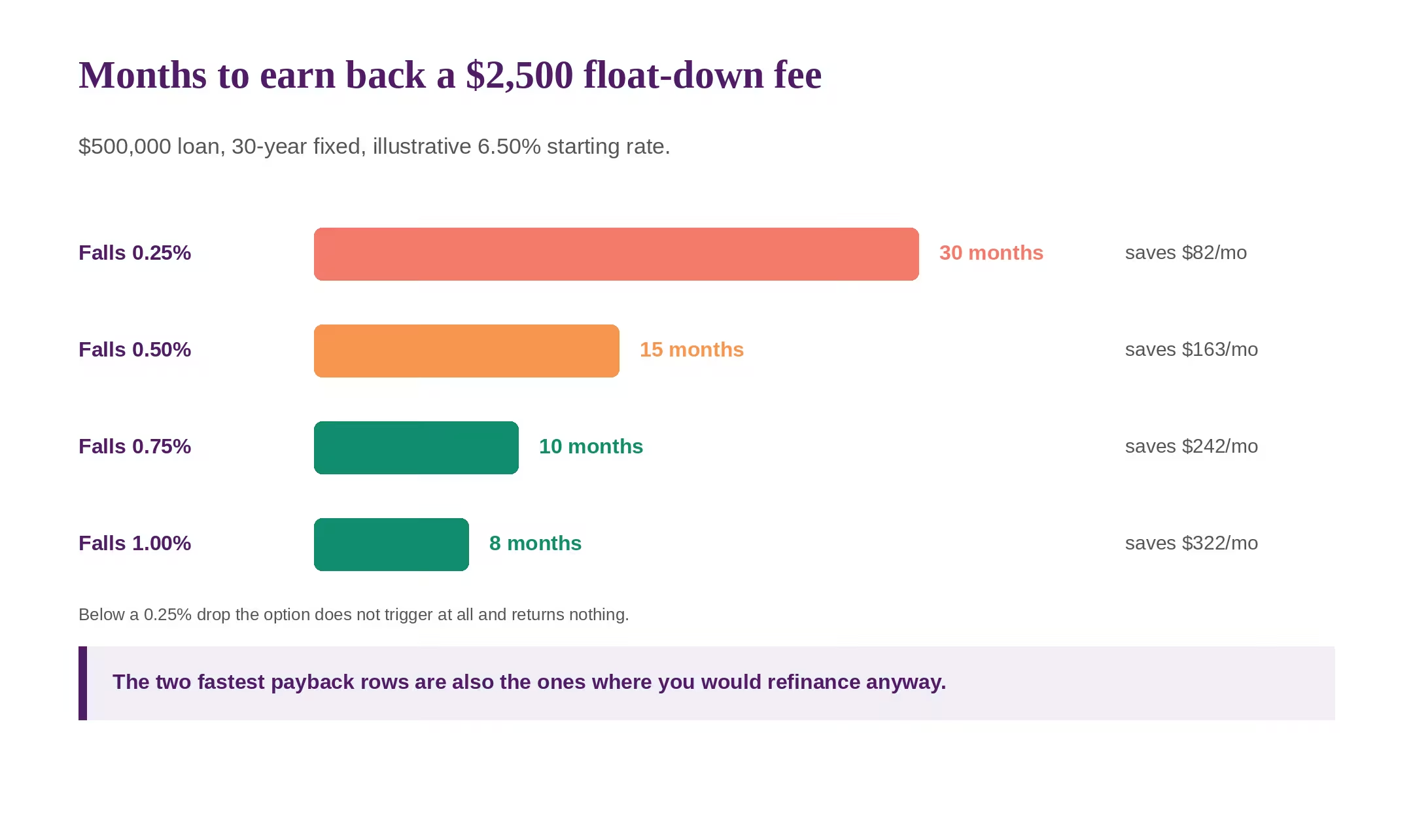
A quarter-point drop is the most common trigger and the most likely one to actually hit. It takes two and a half years of payments to earn the fee back.
The larger drops pay back faster, which is where the pitch lives. But look at what those scenarios really are.
If it pays off, you would have refinanced anyway
This is the part that breaks the math, and almost nobody says it out loud.
A float-down is only valuable for the months between when you exercise it and when you would have refinanced regardless. At a 0.25% drop you probably never refinance — the closing costs are not worth it — so you hold the loan and eventually clear the fee in month 31.
At a 1.00% drop, you refinance. Everyone refinances at a full point. So the float-down bought you the savings for the six to twelve months before you would have moved anyway. That is real, but it is a fraction of the thirty years of savings the break-even chart implies.
The float-down pays best exactly where a refinance was already coming. You are buying something you were going to get for a different price, later.
You already own a float-down
Here is the part that matters most, and it follows directly from how lock pipelines work.
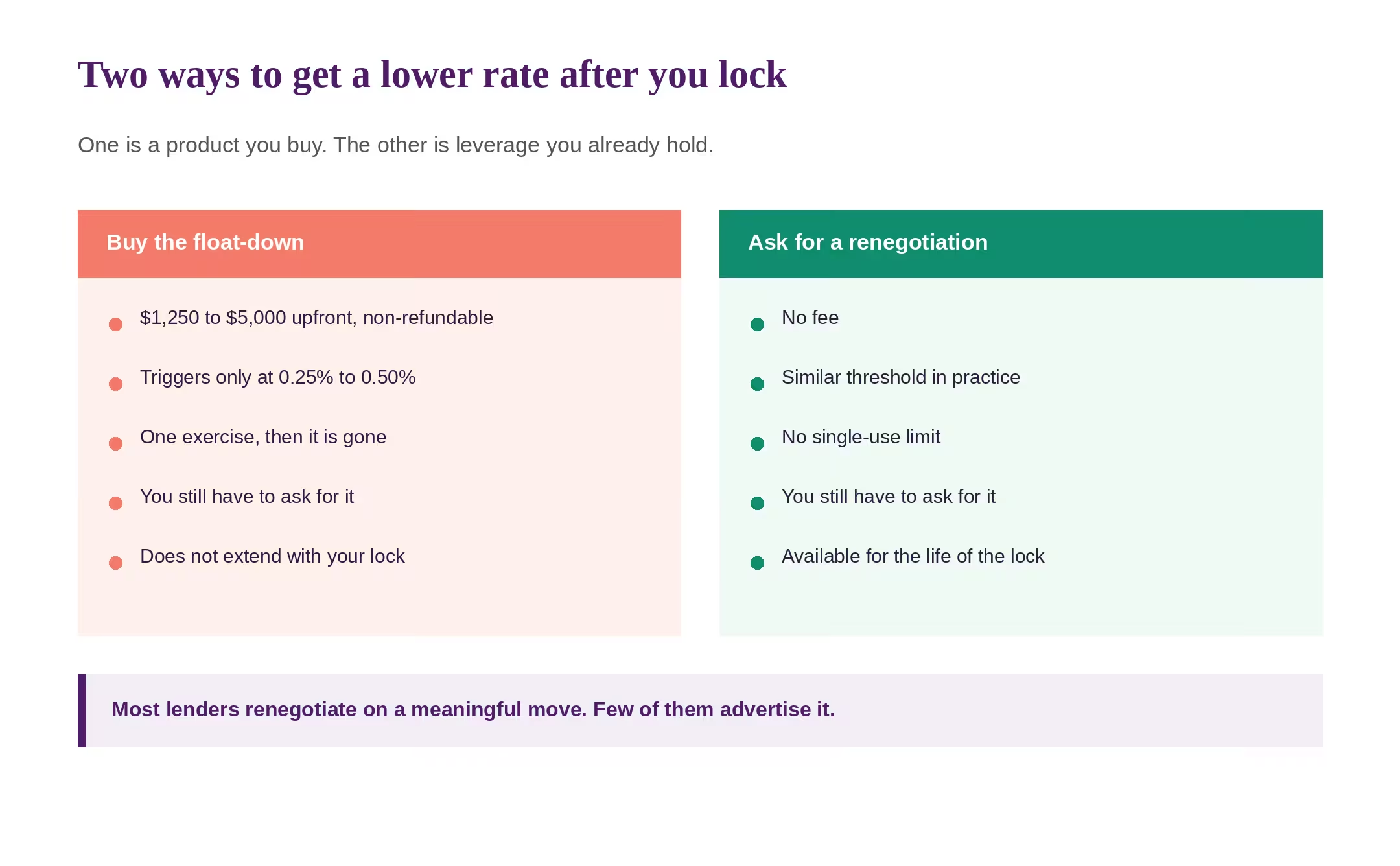
When you lock, the lender is obligated and you are not. If rates fall meaningfully, you can renegotiate or walk to a competitor — and the lender knows it. Losing a loan late in the process costs them more than giving back part of the margin, because the hedge stays on the books either way.
Which is why most lenders will renegotiate on a meaningful market move whether or not you bought anything. The threshold is similar to a float-down trigger, roughly a quarter point. The difference is that it costs nothing, it has no expiration inside your lock, and almost nobody advertises it because it is a concession, not a product.
The float-down sells you a contractual, fee-bearing, single-use version of leverage you already hold for free. It is more certain — a contract beats a policy — but you are paying real money for the certainty, not for the outcome.
Who pays for the "free" version
Some lenders offer a float-down at no stated charge, or run a generous renegotiation policy as a matter of course. That is better for the borrower who uses it. It is worth understanding where the money comes from.
An option that costs nothing at the counter still costs the lender something. It comes out of margin. Margin is set on the rate sheet. So the cost lands in everyone's pricing — including the large majority of borrowers who never exercise anything, never ask, and never knew the policy existed.
Our position: we would rather work with lenders who price tightly and hold a sensible renegotiation policy than lenders who advertise a float-down and fund it out of the rate everyone pays. In our view, a slightly better rate on every loan beats an option that most borrowers will not use.
Reasonable people in this industry disagree. A lender with a strong float-down program will argue the feature wins them enough volume to price it efficiently, and that borrowers value certainty. That argument is not unserious. It just has not changed how we quote.
When a float-down is defensible
Three situations where the trade can make sense, and it is worth naming them honestly:
A long lock in a falling market. On a 90-day or new-construction lock, with the Fed signaling cuts, you are holding a lot of exposure. A float-down with a reachable trigger covers real risk over a real window.
A low fee and a low trigger. At 0.25 points with a 0.25% trigger, the economics are much better than at 1.0 point with a 0.50% trigger. The fee and the trigger are the whole product. Get both in writing.
You are certain you will not refinance. If you are buying with cash reserves and plan to pay this loan down aggressively, the refinance argument above does not apply to you, and the float-down's value is not capped the same way.
Outside those, the fee tends to be the only certain number in the transaction.
What to ask instead
If your lender brings up a float-down, four questions get you to the real answer:
What is the exact fee, and is it refundable? It is almost never refundable. Getting the number in writing turns an abstract benefit into a concrete cost you can weigh.
What is the trigger, and is it measured against my locked rate or the market index? These are not the same thing, and the difference decides whether you ever qualify.
What is your renegotiation policy without the float-down? This is the question that usually ends the conversation. If the answer is "we would look at it on a quarter-point move," you have just been told the free version exists.
What does the same loan price at with a lender that does not offer one? Compare it. The float-down is worth buying only if the loan carrying it is otherwise priced competitively.
Frequently asked questions
How much does a float-down option cost?
Typically 0.25% to 1.0% of the loan amount, paid upfront and non-refundable. On a $500,000 loan that is $1,250 to $5,000. Some lenders charge nothing directly and build the cost into a slightly higher starting rate instead.
How far do rates have to drop for a float-down to trigger?
Most lenders set the trigger between 0.25% and 0.50%. A smaller move does not qualify, no matter how close it gets. Ask whether the trigger is measured against your locked rate or a market index.
Can I get a lower rate after locking without a float-down?
Often, yes. Many lenders will renegotiate if the market moves enough, because losing the loan costs them more than reducing their margin. There is no guarantee and it is at their discretion, but the question is always worth asking.
Is a float-down the same as a rate lock extension?
No. An extension buys more days at your existing rate and typically costs about 0.125 points per week. A float-down buys the right to reset your rate downward, and it does not extend your lock.
Should I get a float-down on a 90-day lock?
This is the strongest case for one. Long locks carry more exposure, and a reachable trigger over 90 days covers real risk. Compare the fee against the cost of the longer lock itself before deciding.
Do all lenders offer float-downs?
No. Many do not, and their absence is not a sign of worse pricing — sometimes the opposite, since the cost of the feature has to come from somewhere.
The bottom line
A float-down is an option with a fee, a trigger, one use, and an expiration. Priced fairly, it is a legitimate product. Priced the way it usually is, it asks you to pay certain money for a benefit that is unlikely, capped by the refinance you would have done anyway, and partly available to you for free.
Our advice is the same as it is on lock length. Get the fee and the trigger in writing, compare the loan against one without the feature, and ask what the lender would do on a quarter-point move if you bought nothing at all.
Then take the better rate.
Compare pricing at altgage.com →